


Industrial High Flex Ethernet Cable: Engineered for Motion, Built for Reliability
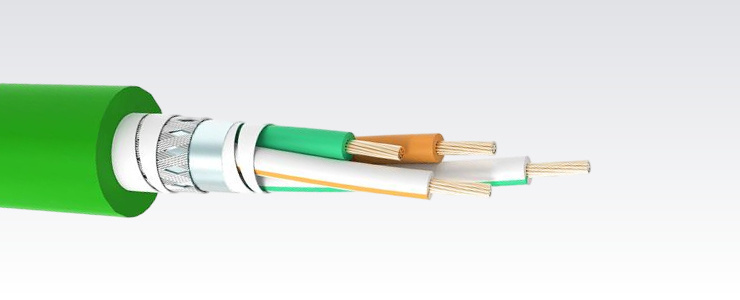
In today’s rapidly advancing automation landscape, the demand for stable and continuous data transmission under dynamic conditions has led to the widespread adoption of the Industrial High Flex Ethernet Cable. Unlike standard network cables, this type of cable is specifically designed to withstand constant motion, bending, and torsion in industrial environments such as robotics, drag chain systems, and automated production lines. With modern factories increasingly relying on real-time communication between machines, the performance of high-flex cables has become a critical factor in maintaining operational efficiency.
At the heart of an Industrial High Flex Ethernet Cable lies a carefully engineered structure that balances flexibility with durability. Typically constructed with finely stranded conductors, such as 26AWG copper, these cables are optimized for repeated movement without compromising signal integrity. Advanced shielding systems, including foil and braided layers, provide excellent resistance to electromagnetic interference, ensuring stable data transmission even in electrically noisy environments. Meanwhile, precision twisting of conductor pairs minimizes crosstalk, enabling consistent performance at speeds up to 100MHz or higher, depending on the configuration.
Material innovation also plays a key role in enhancing cable performance. High-grade outer jackets made from PUR or similar industrial polymers offer superior resistance to oil, abrasion, and harsh environmental conditions. This makes Industrial High Flex Ethernet Cable particularly suitable for applications involving continuous flexing, such as conveyor systems, machine tools, and automated handling equipment. Compared with conventional cables, these specialized designs significantly extend service life while reducing maintenance frequency and downtime.
Behind these performance advantages is a manufacturing process that emphasizes precision and consistency. From conductor drawing and stranding to insulation extrusion and shielding application, every step is tightly controlled using advanced production technologies. Automated testing systems evaluate electrical performance, bending endurance, and environmental resistance to ensure each cable meets strict industrial standards. This focus on quality assurance reflects a deeper commitment to delivering reliable connectivity solutions that can perform under real-world industrial stress.
Equally important is the ability to tailor solutions to specific application needs. Whether the requirement is enhanced flexibility for drag chain systems or reinforced shielding for high-interference environments, modern manufacturers are increasingly focused on customization. This approach not only improves compatibility with complex systems but also demonstrates a service-oriented philosophy that prioritizes long-term customer value over one-size-fits-all products.
As industrial networks continue to evolve, the importance of dependable connectivity cannot be overstated. The Industrial High Flex Ethernet Cable represents a fusion of advanced materials, precise engineering, and rigorous manufacturing standards. For engineers and system integrators seeking reliable performance in motion-intensive environments, exploring customized cable solutions and engaging directly with experienced manufacturers can provide the insight and support needed to achieve optimal results.
We are here for you
 Contact with us







ZEN KABEL
GUIFANGQIAO INDUSTRIAL ZONE, LIN'AN DISTRICT, HANGZHOU CITY, ZHEJIANG PROVINCE, CHINA. 311312
© 2026 HANGZHOU ZENKABEL TECHNOLOGY CO., LTD | Powered by HANGZHOU