


Fiber Optic Splitter – Efficient Signal Distribution for Optical Networks
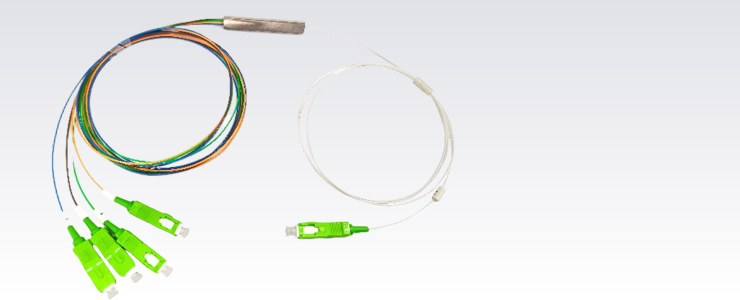
What Is a Fiber Optic Splitter?A Fiber Optic Splitter is a passive optical device used to divide a single optical signal into multiple output signals. It plays a critical role in fiber optic communication systems, especially in passive optical networks (PON), where one input signal needs to be distributed to multiple users without requiring active power. The Fiber Optic Splitter ensures uniform signal distribution while maintaining low insertion loss and high reliability, making it essential for modern broadband and telecommunications infrastructure.Working Principle and StructureThe Fiber Optic Splitter operates by splitting light signals through precise optical design, commonly using PLC (Planar Lightwave Circuit) or FBT (Fused Biconical Taper) technology. PLC splitters offer balanced output and wide wavelength operation, while FBT splitters are cost-effective for simpler applications. The device typically includes input and output fibers, a splitting chip or fused region, and protective housing to ensure durability and stable performance in various environments.Key Features of Fiber Optic SplitterHigh Signal UniformityA Fiber Optic Splitter provides consistent signal distribution across all output ports, ensuring equal performance for each connected user or device.Low Insertion LossDesigned to minimize signal attenuation, the Fiber Optic Splitter maintains efficient data transmission and supports long-distance communication networks.Wide Operating WavelengthIt supports a broad wavelength range, making it suitable for multiple optical communication systems, including broadband, CATV, and data transmission.Compact and Durable DesignThe splitter features a compact structure that allows easy integration into fiber distribution boxes, cabinets, and network systems. Its robust housing ensures resistance to environmental factors such as temperature changes and mechanical stress.Applications in Optical CommunicationThe Fiber Optic Splitter is widely used in various fiber network scenarios:FTTH (Fiber to the Home): Distributes a single optical signal to multiple households efficiently.Telecommunication Networks: Enables large-scale signal distribution in central offices and access networks.Data Centers: Supports high-speed data transmission and network scalability.Cable Television (CATV): Ensures stable signal delivery to multiple endpoints.Advantages of Using Fiber Optic SplitterUsing a Fiber Optic Splitter offers several benefits:Energy Efficiency: Being a passive device, it requires no external power supply.High Reliability: Minimal maintenance and long service life.Cost-Effective: Reduces infrastructure costs by sharing a single fiber among multiple users.Scalability: Easily expands network coverage without major system changes.Installation and MaintenanceProper installation of a Fiber Optic Splitter ensures optimal performance. It should be installed in clean, protected environments to avoid dust contamination. Fiber connections must be handled carefully to prevent signal loss. Regular inspection helps maintain stable long-term operation and ensures efficient network performance.
We are here for you
 Contact with us







ZEN KABEL
GUIFANGQIAO INDUSTRIAL ZONE, LIN'AN DISTRICT, HANGZHOU CITY, ZHEJIANG PROVINCE, CHINA. 311312
© 2026 HANGZHOU ZENKABEL TECHNOLOGY CO., LTD | Powered by HANGZHOU