


CAT7A Ethernet Cable – High‑Speed, Future‑Ready Network Solution
What Is CAT7A Ethernet Cable?
The CAT7A Ethernet Cable (Category 7A) is an advanced network cable designed to support high‑frequency data transmission. It extends the capabilities of earlier Ethernet standards by delivering enhanced bandwidth up to 1 200 MHz, making it ideal for high‑speed applications such as data centers, enterprise networks, audiovisual systems, and modern smart buildings. With superior shielding and robust construction, CAT7A Ethernet Cable helps ensure reliable signal integrity and minimal interference even in challenging electromagnetic environments.
Technical Performance and Specifications
A CAT7A Ethernet Cable is engineered with multiple design features that elevate its performance profile:
Enhanced Bandwidth and Speed
The cable supports bandwidth up to 1 200 MHz, significantly higher than CAT6 and CAT6A standards. This extended capability allows systems to handle high data loads and future‑proof network infrastructure for emerging technologies such as 10 GbE and beyond.
Superior Shielding for Noise Reduction
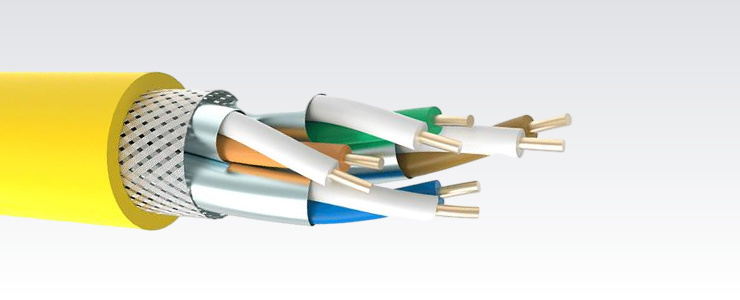
A CAT7A Ethernet Cable typically incorporates S/FTP (Shielded Foiled Twisted Pair) construction, where each pair of twisted wires is shielded individually with foil, and the overall cable is wrapped in an additional shield. This double shielding dramatically reduces crosstalk, electromagnetic interference (EMI), and radio frequency interference (RFI), ensuring stable signal transmission over long distances.
Durable Structure and Materials
The cable uses high‑quality copper conductors with precise twisting and insulation, ensuring excellent conductivity and minimal attenuation. CAT7A Ethernet Cable is also designed with robust jacketing materials that resist abrasion, moisture, and bending stresses, making it suitable for both indoor and certain industrial applications.
Typical Applications
The advanced capabilities of a CAT7A Ethernet Cable make it suitable for a variety of network environments:
Enterprise and Data Center Networks
In enterprise networks and data centers where high traffic and low latency are critical, CAT7A Ethernet Cable provides reliable high‑speed connectivity for servers, switches, and storage systems. Its superior bandwidth supports large data transfers and virtualization workloads without compromising performance.
Smart Building and AV Systems
Modern smart building systems—incorporating IoT devices, IP cameras, access control, and audiovisual systems—benefit from the high bandwidth and noise resistance of CAT7A Ethernet Cable. It enables seamless data and video transmission for high‑definition streaming and integrated automation platforms.
Residential and Commercial Installations
For high‑performance home networks and commercial office infrastructures, CAT7A Ethernet Cable delivers future‑ready connectivity that supports gigabit and multi‑gigabit Ethernet with minimal signal loss.
Installation Best Practices
Proper installation techniques help maximize the performance of CAT7A Ethernet Cable:
Maintain Bend Radius: Avoid tight bends that exceed recommended bend radius to prevent signal degradation.
Ensure Proper Termination: Use connectors and jacks compatible with CAT7A specifications to maintain shielding and ensure full‑speed performance.
Limit Interference Exposure: Avoid routing cables near high‑power electrical lines or sources of heavy EMI to preserve signal quality.
Advantages Over Lower Categories
Compared with CAT5e, CAT6, and CAT6A, the CAT7A Ethernet Cable delivers higher bandwidth, better shielding, and greater overall performance, making it ideal for network environments that require robust, future‑proof infrastructure. Its design supports expanding data demands, increased reliability, and improved network stability.
We are here for you
 Contact with us







ZEN KABEL
GUIFANGQIAO INDUSTRIAL ZONE, LIN'AN DISTRICT, HANGZHOU CITY, ZHEJIANG PROVINCE, CHINA. 311312
© 2026 HANGZHOU ZENKABEL TECHNOLOGY CO., LTD | Powered by HANGZHOU