


Control Cables vs. Signal Cables: A Comprehensive Guide to Understanding Key Differences
Control Cables vs. Signal Cables: What You Need to Know
Table of Contents
1. Introduction to Control and Signal Cables
2. Understanding Control Cables
3. Understanding Signal Cables
4. Key Differences Between Control and Signal Cables
5. Applications of Control Cables
6. Applications of Signal Cables
7. Choosing the Right Cable for Your Application
8. Common Questions About Control and Signal Cables
9. Conclusion
1. Introduction to Control and Signal Cables
In the world of electrical engineering, control cables and signal cables play pivotal roles in ensuring smooth operation and communication among devices. While they may seem similar at first glance, these cables serve distinct purposes and possess unique characteristics that influence their applications. Understanding these differences is crucial for engineers, technicians, and anyone involved in electrical projects.
This article provides an in-depth examination of control cables and signal cables, exploring their definitions, differences, applications, and selection criteria. Whether you are designing a control system, installing new equipment, or simply looking to enhance your knowledge, this guide will equip you with vital information.
2. Understanding Control Cables
Control cables are designed to transmit control signals from one point to another. They are essential in automation and control systems, where they enable devices to communicate effectively. Control cables are typically used to connect sensors, actuators, and controllers, facilitating the operation of machinery and systems.
2.1 Characteristics of Control Cables
Control cables exhibit several key characteristics that contribute to their functionality:
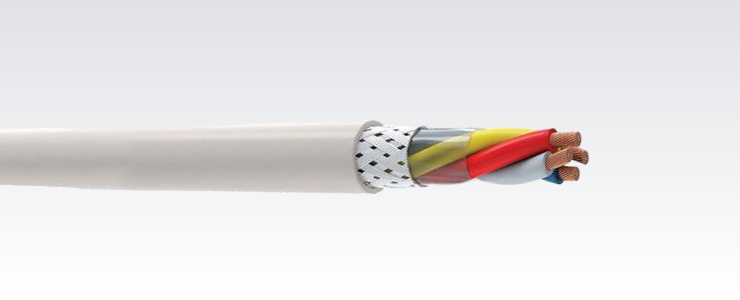
– Multi-conductor Design: Control cables often feature multiple conductors within a single sheath, allowing for the transmission of several signals simultaneously.
– Shielding: Many control cables are shielded to protect against electromagnetic interference (EMI) and radio frequency interference (RFI). This shielding helps maintain signal integrity in electrically noisy environments.
– Temperature Ratings: Control cables are available in various temperature ratings, making them suitable for different environments, from industrial settings to outdoor applications.
– Flexibility: Certain control cables are designed to be flexible, making them ideal for applications that require frequent movement or bending.
2.2 Types of Control Cables
Control cables come in various types, depending on their intended use:
– Power Control Cables: These cables are used to control power circuits and are often found in industrial machinery.
– Instrumentation Cables: Designed for measuring and monitoring processes, these cables are crucial in control systems requiring precise data transmission.
– Data Communication Cables: These cables facilitate communication between devices, ensuring reliable transmission of control signals.
3. Understanding Signal Cables
Signal cables, on the other hand, are designed primarily for transmitting signals, such as audio, video, or data, over short to medium distances. These cables are integral to various applications, including telecommunications, broadcasting, and consumer electronics.
3.1 Characteristics of Signal Cables
Signal cables possess unique characteristics that distinguish them from control cables:
– Single or Multi-conductor Options: Signal cables may feature a single conductor or multiple conductors, depending on the application and the type of signal being transmitted.
– Impedance Matching: Many signal cables are designed with specific impedance to minimize signal loss and reflections, particularly in high-frequency applications.
– Shielding: Similar to control cables, signal cables often incorporate shielding to reduce interference and enhance signal quality.
– Length Limitations: Signal cables typically have a maximum length limitation to maintain signal integrity; longer runs may require signal boosting or repeating.
3.2 Types of Signal Cables
Signal cables are categorized based on their applications:
– Coaxial Cables: Widely used for television and internet connections, coaxial cables consist of a central conductor, insulation, a metallic shield, and an outer jacket.
– Twisted Pair Cables: Common in telecommunications, twisted pair cables consist of pairs of wires twisted together to reduce crosstalk and interference.
– Fiber Optic Cables: These cables use light to transmit data and are ideal for high-speed internet and long-distance communication.
4. Key Differences Between Control and Signal Cables
Understanding the differences between control and signal cables is essential for selecting the right type for your project. Here are the key distinctions:
4.1 Purpose
Control cables are primarily designed to transmit control signals, while signal cables focus on transmitting audio, video, or data signals.
4.2 Construction
Control cables often have multiple conductors within a single sheath, while signal cables may have single or multi-conductor designs, depending on the application.
4.3 Shielding Requirements
Both cable types can have shielding, but control cables typically require more robust shielding to protect against EMI and RFI due to their use in industrial settings.
4.4 Signal Integrity
Signal cables are engineered to maintain signal integrity over longer distances, while control cables may be more focused on short-distance communication.
4.5 Temperature and Environmental Ratings
Control cables often have specific ratings for harsh environments, while signal cables may be more suited for controlled indoor conditions.
5. Applications of Control Cables
Control cables are utilized in various applications, including:
5.1 Industrial Automation
In industrial settings, control cables are essential for connecting equipment and systems, enabling automated processes, and monitoring production lines.
5.2 HVAC Systems
Control cables are used in heating, ventilation, and air conditioning systems to regulate temperature and airflow.
5.3 Robotics
In robotics, control cables facilitate communication between sensors, motors, and controllers, allowing for precise movement and operation.
5.4 Building Management Systems
Control cables are integral to building management systems, connecting various devices to optimize energy usage and enhance security.
6. Applications of Signal Cables
Signal cables are widely applied across numerous industries:
6.1 Telecommunications
Signal cables are critical in telecommunications for voice and data transmission, providing connectivity for residential and commercial users.
6.2 Broadcasting
In broadcasting, signal cables are used to transmit audio and video signals, ensuring high-quality transmission for television and radio.
6.3 Consumer Electronics
Signal cables connect various consumer electronics, including televisions, computers, and audio systems, improving the quality of multimedia experiences.
6.4 Security Systems
Signal cables play a vital role in security systems, transmitting signals from cameras and sensors to monitoring stations.
7. Choosing the Right Cable for Your Application
Selecting the appropriate cable for your specific application requires careful consideration of various factors:
7.1 Determine the Signal Type
Identify whether you need a control cable or a signal cable based on the type of signals you will be transmitting.
7.2 Assess Environmental Conditions
Evaluate the environmental conditions where the cables will be installed. For harsh environments, consider cables with specific temperature and water resistance ratings.
7.3 Consider Signal Distance
Determine the distance over which the signals need to be transmitted. For longer distances, prioritize signal cables designed for maintaining integrity over extended runs.
7.4 Budget Constraints
Consider your budget while selecting cables. High-quality cables may have a higher upfront cost but can save money in the long run through reduced maintenance and better performance.
8. Common Questions About Control and Signal Cables
8.1 What is the main difference between control cables and signal cables?
Control cables transmit control signals, while signal cables are used to carry audio, video, or data signals.
8.2 Can control cables be used for signal transmission?
While control cables can transmit signals, they are not optimized for high-frequency applications like signal cables. It's best to use the appropriate type for each application.
8.3 How do I know which cable to choose for my project?
Assess the type of signal, environmental conditions, distance, and budget to determine whether a control cable or a signal cable is more suitable.
8.4 Are control cables more expensive than signal cables?
The cost can vary depending on the type, specifications, and manufacturer. Control cables may be more expensive due to their specialized design and shielding.
8.5 How do I maintain control and signal cables?
Regular inspections for damage, ensuring proper installation, and keeping cables clear of obstructions can help maintain performance and longevity.
9. Conclusion
In conclusion, understanding the differences between control cables and signal cables is essential for anyone involved in electrical engineering, automation, or telecommunications. Each type of cable serves distinct purposes and is tailored to specific applications, making it crucial to select the right one based on the requirements of your project. By considering factors such as signal type, environmental conditions, distance, and budget, you can make informed decisions that ensure optimal performance and reliability in your electrical systems.
We are here for you
 Contact with us







ZEN KABEL
GUIFANGQIAO INDUSTRIAL ZONE, LIN'AN DISTRICT, HANGZHOU CITY, ZHEJIANG PROVINCE, CHINA. 311312
© 2026 HANGZHOU ZENKABEL TECHNOLOGY CO., LTD | Powered by HANGZHOU